
The Aesthetics of Craftsmanship Behind Cosmetic Bottle Caps The Details of Craftsmanship Determine a Brand's Status
The Aesthetics of Craftsmanship Behind Cosmetic Bottle Caps
The Details of Craftsmanship Determine a Brand's Status
In today's fiercely competitive cosmetics market, the moment a customer picks up a product, their first impression isn't the texture of the cream or the fragrance, but the instant they touch it. The texture of the packaging, the smoothness of opening and closing, and the precision of shutting down the cap create the customer's "first impression." Did you know that a seemingly simple bottle cap represents a perfect fusion of material selection, mold making, craftsmanship, and humanistic spirit? Now, let's explore the secrets of manufacturing high-quality cosmetic bottle caps.
1. Material Selection: Determining Cap Quality, the Starting Point of the Touch
The choice of material for cosmetic bottle caps is crucial, as it affects the product's texture, durability, and safety.
Currently, the most common bottle cap materials on the market include PMMA (acrylic), ABS resin, PETG, and metallic materials, each with its own characteristics:
PMMA (acrylic): High transparency and strong gloss, creating a "crystal-like" visual effect.
ABS resin: Good gloss, impact resistance, and processing performance, making it the first choice for mid-to-high-end cosmetic packaging.
PETG: Combining transparency and toughness, it is environmentally friendly and recyclable, aligning with modern sustainability principles.
Metallic materials: Through special injection molding processes or electroplating, they can achieve a metallic appearance, offering a luxurious effect.
When selecting materials, we need to consider stability, ensuring they do not fade, deform, or age during long-term storage; compliance with international cosmetic packaging standards such as FDA and EU, preventing the migration of harmful substances; and the matching of texture, ensuring the material's feel aligns with the brand positioning. For example, luxury brands might choose a warm and substantial feel, while younger brands might choose a light and vibrant feel.
We've encountered cases where well-known skincare brands developed micro-cracks in their products after storage in humid environments due to improper cap material selection. While this didn't affect usability, it severely damaged the brand's premium image, ultimately forcing a complete recall of that batch of packaging, resulting in significant losses. Therefore, material selection is extremely important.
2. Mold Craftsmanship: Micron-Level Precision for a Perfect Fit
Material selection is crucial to the quality of cosmetic bottle caps, and the mold directly determines the shape and structure of the cap. The manufacturing of cosmetic bottle cap molds requires extremely high precision; it's an art form at the micron level.
Mold design is a fusion of science and aesthetics, and it can be categorized into three types:
Parting Line Design: Precise calculation of the parting line position to ensure no burrs or exposed mold lines.
Ventilation System: A well-designed venting system prevents defects such as air bubbles and material shortages during injection molding.
Cooling Water System: Optimized cooling efficiency ensures uniform shrinkage of the cap, preventing deformation and warping.
Mold processing demands meticulous precision, requiring millimeter-level accuracy. For cosmetic bottle cap molds, key components typically require a precision of ±0.005mm; mirror polishing to below Ra0.025μm ensures a silky smooth surface; and techniques such as texturing and laser engraving are used to achieve rich textures like leather, matte, and geometric patterns. This pursuit of perfection is essential for maintaining a leading market position.
3. Injection Molding Process: A Delicate Balance of Temperature, Pressure, and Time
With high-quality materials and precision molds, the next crucial step is transforming them into perfect bottle caps—injection molding. The core of injection molding is temperature, pressure, and time. Barrel and mold temperatures must be precisely set according to material characteristics, with temperature fluctuations not exceeding ±2℃. Injection and holding pressures need to be controlled in stages to ensure full material filling without generating internal stress. Injection time, cooling time, and holding time are optimized to balance efficiency and quality.
There are other special process applications, such as:
Two-color/multi-color injection molding: Achieving visual effects of color gradients and material contrasts.
In-mold decoration: Transferring patterns and textures during injection molding, enhancing texture and anti-counterfeiting.
Microfoaming technology: Reducing the weight of bottle caps while enhancing tactile softness.
In packaging material companies' workshops, each injection molding machine should be equipped with a fully automatic monitoring system that tracks 48 process parameters in real time. Any slight deviation will trigger an alarm and automatically adjust. This "smart manufacturing" concept ensures a high degree of consistency for each batch of products.
4. Installation Process: The Last Centimeter, the Key to the Experience
Even if the bottle cap itself is flawless, improper installation can ruin the entire product experience. The fit between the bottle cap and the bottle body is a perfect combination of mechanical engineering and ergonomics.
The installation process requires meticulous attention to detail. The gap between the cap and the bottle body is typically controlled between 0.1-0.3mm; the opening torque needs to be moderate, ensuring a tight seal without requiring excessive force, usually between 0.6-1.2 N·m; high-quality bottle caps must withstand over 1000 opening and closing tests while maintaining excellent feel and sealing performance.
A packaging director with 20 years of experience shared, “We train our installation personnel not only in technical skills but also in ‘tactile sensitivity.’ Excellent technicians can judge the perfect fit of a bottle cap with their eyes closed, relying solely on touch.” This is the rich experience of a professional installer; they can judge the fit between the cap and the bottle body by touch, identify minute dimensional deviations, adjust equipment parameters promptly, and protect the cap surface from scratches during installation.
5. Quality Inspection: A Rigorous Guardian at Every Line of Defense
High-quality bottle caps undergo rigorous testing throughout the entire process, from raw materials to finished products. This includes comprehensive screening for parameters such as density, melt flow index, and heavy metal content; online dimensional measurement; weight monitoring; visual defect detection; and, after production, a comprehensive 3D coordinate measuring machine scan for dimensional accuracy measurement, as well as tests for sealing, opening force, drop test, weather resistance, chemical resistance, and temperature cycling.
Modern packaging companies have widely adopted AOI (Automated Optical Inspection) systems. Through high-resolution cameras and artificial intelligence algorithms, these systems can identify minute defects that are difficult for the human eye to detect, achieving an accuracy of up to 0.02mm.
6. Choosing the Right Packaging Partner: Hidden Cost Savings for Businesses
Choosing a high-quality packaging supplier may seem to increase upfront costs, but in the long run, it saves businesses significant hidden costs, such as:
Reduced Production Loss Rate: High-precision molds and stable processes keep the defect rate below 0.5%.
Reduced After-Sales Issues: High-quality bottle caps virtually eliminate customer complaints caused by packaging problems.
Enhanced Brand Value: Exquisite packaging strengthens consumer confidence in product quality and increases repurchase rates.
Accelerated Time to Market: Professional suppliers provide one-stop services from design to mass production, shortening the development cycle.
A cosmetics brand we previously worked with chose low-priced packaging materials in its early stages. As a result, during peak sales seasons, they frequently experienced bottle cap cracking and poor sealing, losing millions in sales and severely damaging their brand image. The following year, after switching to a professional packaging supplier, although packaging costs increased by 15%, customer complaint rates decreased by 92%, repurchase rates increased by 40%, and overall profits increased significantly.
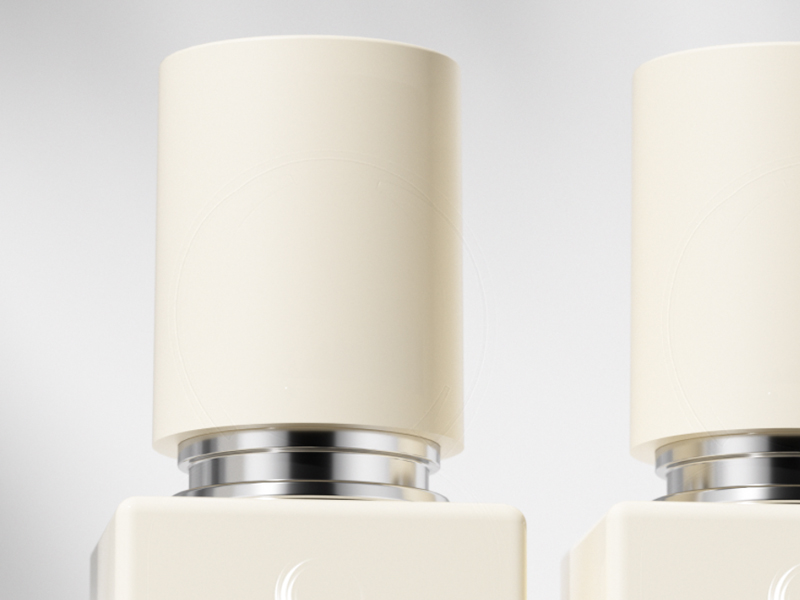
Small as a bottle cap, yet embodying craftsmanship.
In the cosmetics industry, packaging is more than just a container; it's an extension of brand philosophy and a reflection of product value. A high-quality bottle cap, blending materials science, precision engineering, and ergonomics, is the consumer's first point of contact with the product and the brand's first impression.
When a consumer holds your product, the perfect opening and closing feel, the impeccable fit, and the smooth, delicate surface texture silently proclaim the brand's commitment to quality. It's more than just a bottle cap; it's a promise, an attitude, and a trust built between the brand and the user through touch.
In this era where details determine the experience, every turn of the bottle cap is a silent declaration of brand value. Choosing premium packaging materials is not just choosing product accessories, but choosing the brand's future.
---
Special Note: When selecting cosmetic packaging suppliers, it is recommended to conduct on-site inspections of their production workshops, paying close attention to mold maintenance records, the cleanliness of the production environment, and the sophistication of testing equipment. These are often key details that distinguish ordinary suppliers from industry benchmarks.