日本語
日本語 English
 Deutsch
 한국어
한국어 العربية
 Русский
 Türkçe
 Português
 Français
Why Premium Cosmetic Bottle Caps Feel Better in Your Hand
The glass bottle usually gets the first look. The closure often creates the first physical interaction.
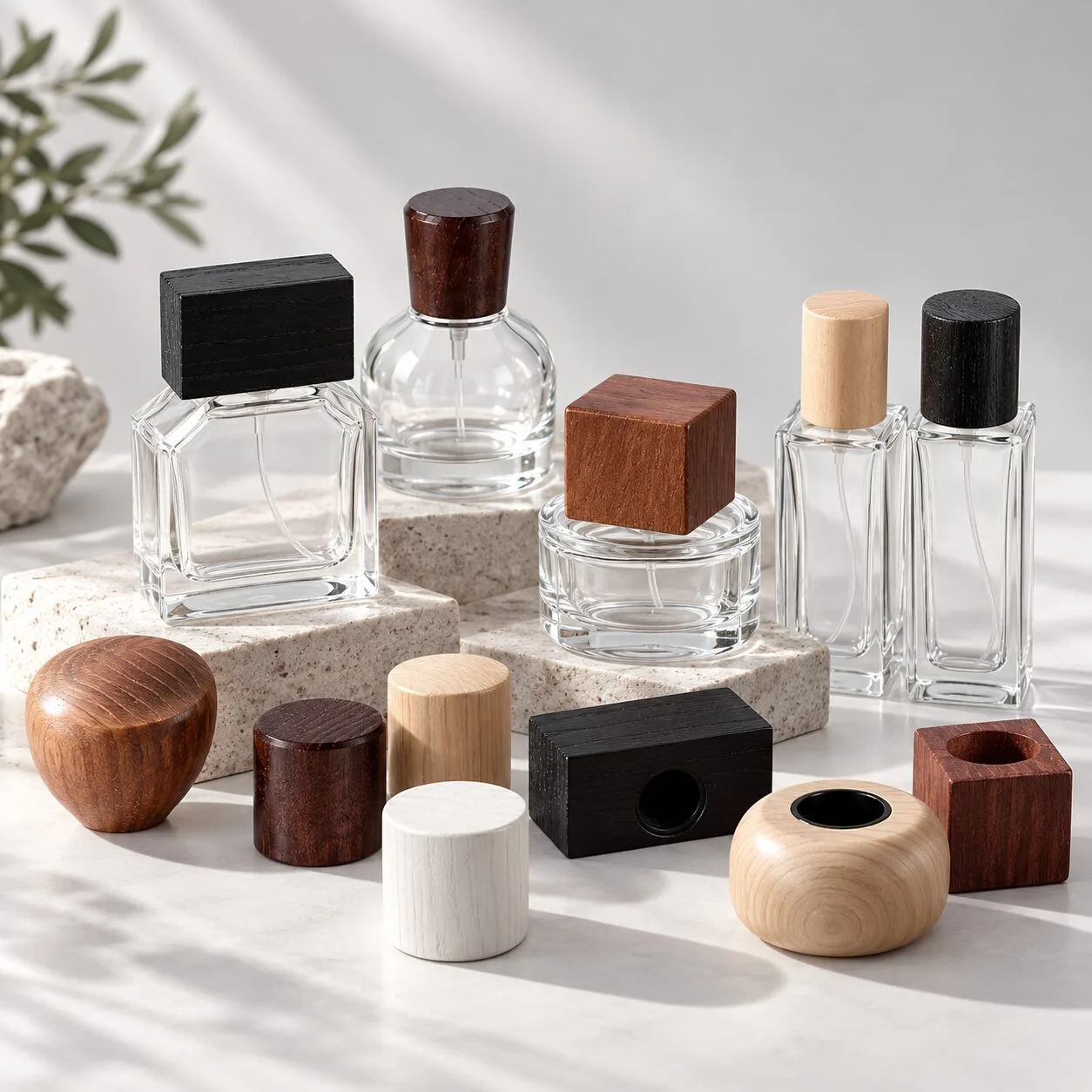
When a customer picks up a serum, cream jar, foundation bottle, or fragrance bottle, the cap immediately becomes part of the experience. Its weight, proportions, surface texture, fit, and opening action can influence how refined the complete package feels.
This is why premium beauty brands pay close attention to cosmetic bottle caps rather than treating them as secondary accessories.
A substantial closure can create a sense of solidity. A lightweight metallic cap can communicate clean, contemporary design. A soft matte surface feels very different from polished metal. Even the relationship between cap diameter and bottle shoulder can change how consumers perceive the package.
For procurement teams, the important point is balance. Premium closure design comes from matching material and construction to the glass bottle, dispensing system, brand positioning, and everyday use.
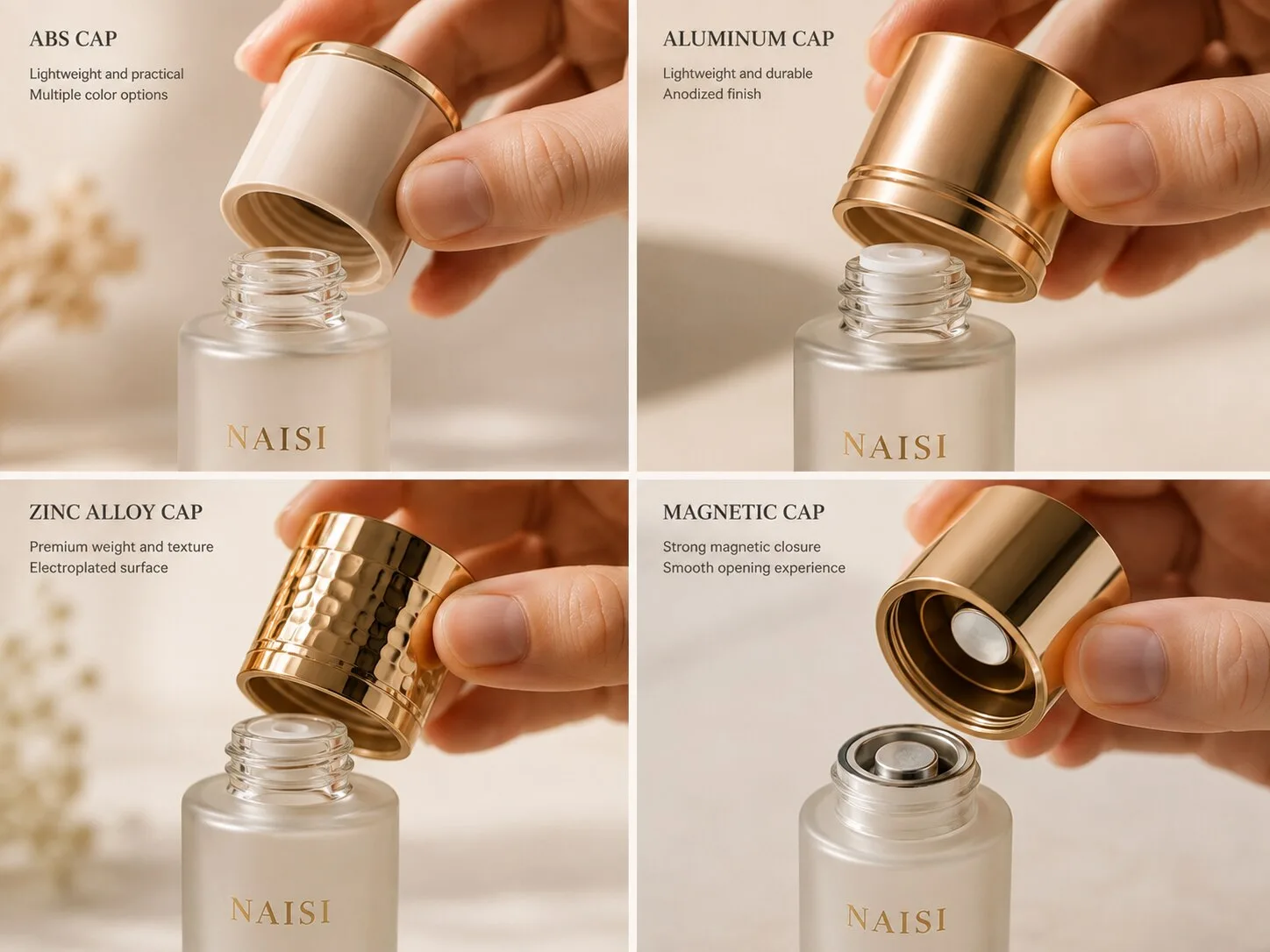
Understanding ABS, aluminum, zinc alloy, and magnetic closure systems gives buyers a more practical foundation for selecting components that look right and feel right.
Weight Perception
Weight has a strong influence on how consumers experience beauty packaging, particularly when the bottle itself uses substantial glass.
Pick up a thick bottom glass serum bottle and the weight creates an immediate physical impression. Add a very light closure with proportions that feel disconnected from the bottle, and the package can lose some of that visual and tactile balance.
A carefully selected cap changes the experience.
The objective, however, is not to make every closure as heavy as possible.
Balance matters more.
A 30ml serum bottle requires a different closure proportion from a large cream jar. A compact fragrance bottle may benefit from a substantial cap because the closure becomes an important part of the silhouette. A tall lotion bottle can feel more balanced with a visually lighter component.
This relationship is particularly important for luxury cosmetic packaging.
Consumers experience the complete package through several small interactions. They lift it from a shelf. They remove the cap. They operate the pump or dropper. They replace the closure.
Each action contributes to perceived quality.
For packaging buyers, physical sampling is therefore essential. A rendering can show color and proportion, while an assembled sample reveals the actual center of gravity, weight distribution, fit, and handling experience.
Try the package with one hand.
Remove and replace the cap several times.
Hold the bottle by the body and then near the closure.
Observe whether the component feels naturally proportioned to the glass.
Weight also affects practical sourcing considerations. Heavier components contribute to the finished pack weight and shipping weight. Their construction may also influence component cost.
Premium packaging development works best when tactile value and commercial requirements are considered together.
For this reason, cosmetic bottle caps should be evaluated on the assembled container rather than separately on a component sample board.
ABS
ABS, short for acrylonitrile butadiene styrene, is widely used for rigid components across many packaging and consumer product applications.
In cosmetic packaging, it can be used for selected caps and decorative outer components where its rigidity, formability, and finishing flexibility suit the design.
From a brand perspective, one of its advantages is design freedom.
An ABS component can be developed in different shapes and proportions. Depending on the component construction and decoration system, the visible surface can also support a variety of aesthetic directions.
This makes ABS useful when a brand wants a distinctive closure without relying on a solid metal component.
Yet material name alone tells buyers very little about the final tactile quality.
Two ABS caps can feel completely different.
Wall structure, internal construction, dimensions, surface finish, assembly, and the relationship with the bottle all influence the result. A well designed component can feel precise and visually substantial, while a different construction may communicate a lighter character.
Surface treatment adds another layer.
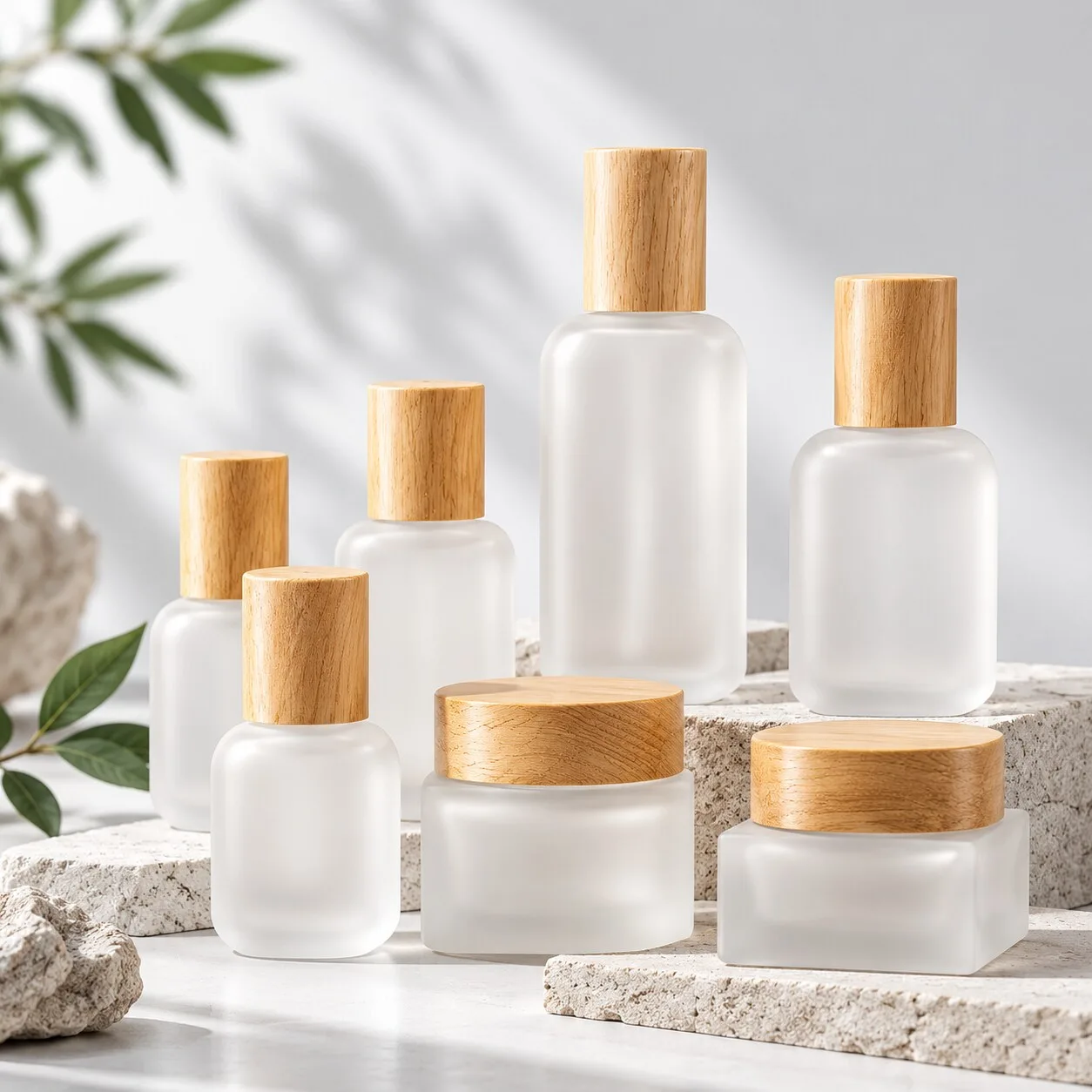
A matte appearance can complement frosted skincare glass. A glossy finish can work with polished or high clarity packaging. Metallic looking decorative treatments may be used where the selected process and component design support the intended appearance.
For procurement teams, physical samples remain the best evaluation method.
Rather than asking whether a cap is simply "ABS," consider several more useful questions.
How does it feel on the finished glass bottle?
Does its diameter suit the bottle shoulder?
Does the surface appearance coordinate with the pump or dropper collar?
Does the assembled closure feel stable during normal handling?
These details are especially important when developing a complete skincare packaging collection.
If a serum bottle, lotion bottle, and cream jar all use different closures, the components can still share a common visual language through shape, color, finish, and proportion.
That consistency often creates more perceived value than material choice alone.
Aluminum
Aluminum brings a distinctly different character to beauty packaging.
Its naturally metallic appearance works particularly well for brands pursuing clean, modern, technical, or minimalist visual identities. It can provide a refined metal look while remaining relatively lightweight compared with heavier metal closure solutions.
This combination makes aluminum components attractive for selected skincare, fragrance, and makeup packaging designs.
The surface appearance can take several directions.
A matte metallic finish creates a softer, understated impression. Brushed visual treatments can emphasize the character of metal. A polished appearance creates stronger reflections and works well when the packaging concept calls for more contrast.
The best choice depends on the glass bottle.
For example, frosted glass combined with a restrained matte metallic closure can create a quiet premium look. Clear high clarity glass with a brighter metallic cap feels sharper and more contemporary.
Color coordination also matters.
The cap is rarely the only metallic element in a cosmetic package. Pumps, collars, droppers, decorative rings, and hot stamped logos may all contribute to the visual composition.
A brand using a champagne tone on the cap should consider how that tone relates to other visible metallic details.
Close color coordination gives the package a more intentional appearance.
Proportion remains equally important.
A wide aluminum cap can become a strong design feature on a perfume bottle. A slimmer component may work better on a serum package where the glass bottle and formula remain the main visual focus.
For sourcing teams, construction should be reviewed alongside appearance. Some cosmetic closures use aluminum as part of a multi material component rather than as a single material structure.
That distinction can influence weight, assembly, cost, and the final tactile result.
Ask the supplier for the actual component specification and evaluate an assembled sample.
The goal is to understand what you are purchasing rather than choosing a closure based only on its metallic appearance.
Zinc Alloy
Zinc alloy is often associated with a more substantial hand feel.
Its density allows designers to create components with noticeable weight, which can support selected prestige packaging concepts where physical presence is part of the desired consumer experience.
This characteristic is particularly relevant in fragrance.
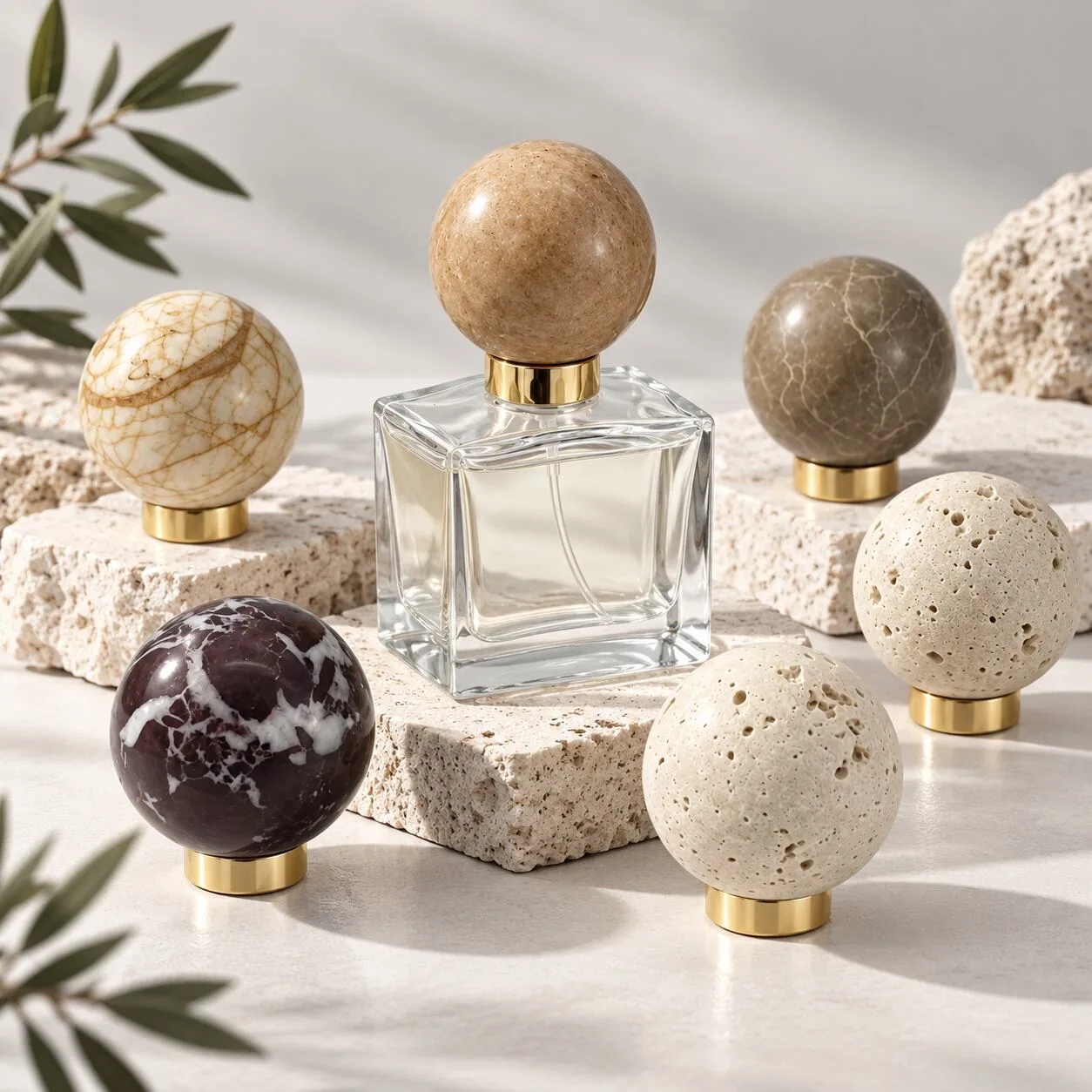
A sculptural perfume bottle with a substantial glass base may use a weighted cap to complete the proportions and tactile character of the package. When the consumer removes the cap, the weight reinforces the sense that the closure is an intentional design object rather than a simple cover.
Certain premium skincare concepts can use the same approach.
A heavy cream jar, for example, may pair naturally with a closure design that has enough visual and physical presence to balance the glass container.
Zinc alloy also offers design possibilities for decorative shapes and detailed forms, depending on the specific component design and manufacturing route.
Surface appearance can then be developed to support the intended packaging language.
For procurement teams, weight should still be treated as a design tool rather than a quality score.
A heavier cap is not automatically more premium.
The finished package needs to feel balanced.
A very heavy closure on a lightweight bottle can shift the center of gravity and make everyday handling less comfortable. It also increases the total package weight, which becomes relevant for international shipping and DTC fulfillment.
Cost should be evaluated at the complete packaging level as well.
If a weighted component contributes strongly to brand recognition and consumer experience, the investment may make sense for a hero product, prestige fragrance, or gift collection.
For a broader skincare range with several SKUs, another closure construction may offer a better balance between visual consistency, tactile quality, and purchasing efficiency.
This is where experienced sourcing becomes useful.
Instead of asking, "Which cap feels most expensive?" ask, "Which cap makes this bottle feel complete?"
That question usually leads to a better packaging decision.
Magnetic Caps
Magnetic caps add another dimension to the tactile experience because the opening and closing action becomes part of the package.
Rather than relying only on visual appearance, the closure creates a physical moment.
The consumer lifts the cap, uses the product, and returns the closure to the bottle. A well designed magnetic system can guide the cap into position and create a controlled closing experience.
This type of interaction is especially familiar in selected premium fragrance packaging.
For niche perfume brands, the cap often plays a significant role in the overall bottle architecture. Magnetic closure systems can support that concept when the bottle, collar, internal cap construction, and magnetic elements are engineered to work together.
Alignment matters.
A cap with a front facing logo, asymmetric shape, or specific decorative detail may need to return to an intended orientation. The closure design should therefore be evaluated as a complete assembly.
The opening force and closing feel also deserve attention.
Consumers interact with packaging repeatedly, so the closure should feel comfortable and predictable in normal use. The tactile experience comes from the whole mechanism, including component dimensions, internal construction, alignment, and assembly quality.
Magnetic systems also introduce additional component considerations compared with simpler cap structures.
For this reason, sampling should focus on the finished package.
Test several assembled units rather than judging a single cap.
Open and close them repeatedly.
Observe alignment.
Check how the cap feels when lifted and returned.
Evaluate whether the weight and dimensions complement the bottle.
For custom fragrance packaging, this stage is particularly valuable before moving into larger production quantities.
Magnetic closures can also influence the broader packaging design.
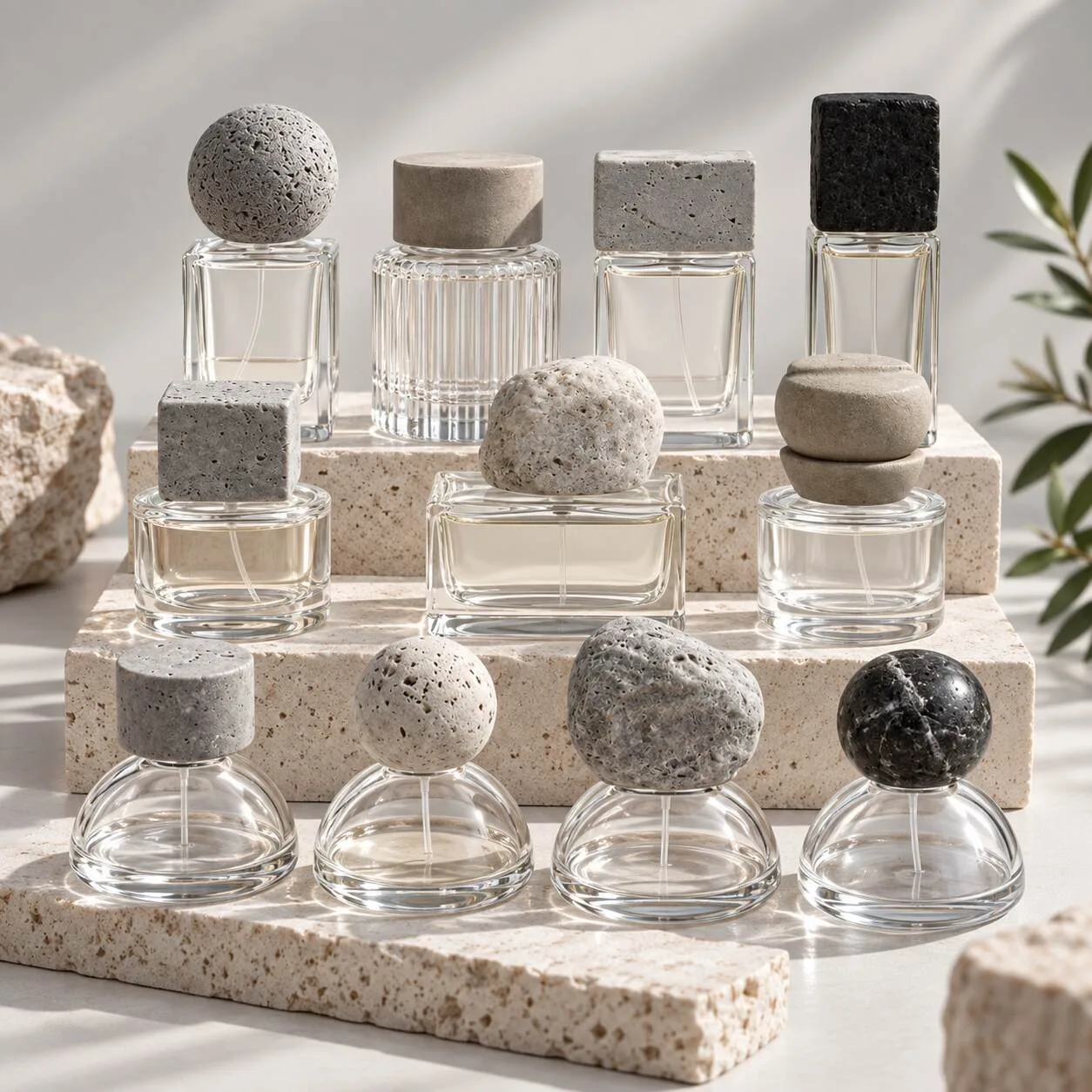
A sculptural cap may become the hero element, allowing the bottle decoration to remain relatively restrained. Clear glass with a strong cap design can create an elegant premium identity without requiring multiple decorative effects across the bottle surface.
This illustrates an important principle in luxury beauty packaging.
Every component does not need to compete for attention.
Sometimes the closure can carry much of the tactile and visual story.
Final Thoughts
Premium packaging is experienced through the hand as much as through the eye.
Glass clarity, bottle shape, decoration, and color create the first visual impression. The closure continues that experience through weight, texture, proportion, fit, and everyday interaction.
ABS provides flexibility for many rigid cosmetic component designs and visual treatments. Aluminum introduces a clean metallic character with relatively light weight. Zinc alloy can bring substantial physical presence to prestige concepts. Magnetic closure systems add a distinct opening and closing experience when the complete structure is carefully coordinated.
The right choice depends on the bottle.
A heavy fragrance bottle may benefit from a closure with greater physical presence. A minimalist serum bottle can work beautifully with a refined metallic component. A skincare collection may prioritize consistent cap colors and shapes across serum bottles, lotion bottles, and cream jars.
For buyers, this means cosmetic bottle caps should enter the packaging discussion early.
Evaluate the closure together with the glass bottle, pump or dropper, decoration, and brand positioning. Request assembled samples. Handle them as a consumer would. Review how the material looks under real lighting and how the complete package feels during repeated use.
The same thinking helps when building a full cosmetic packaging collection.
A consistent cap color can connect bottles of different capacities. Related surface finishes can bring pumps, droppers, and cream jar caps into the same visual family. Carefully controlled proportions allow different containers to feel like members of one brand.
This approach also gives procurement teams a clearer sourcing strategy.
Instead of selecting every component independently, the brand can establish a closure language that continues across future product launches.
At NAISI Packaging, we supply stock and custom cosmetic glass bottles for skincare, fragrance, and beauty brands, together with component matching and surface decoration options including frosting, sandblasting, silk screen printing, hot stamping, and spray coating.
Looking for glass bottles with coordinated premium closures? Explore component matching and custom finishing options with NAISI Packaging.